The State Council: It is clear that social medical treatment is no longer restricted by regional planning. Those who are seriously untrustworthy will be banned for life.
The space for medical services in China society is expected to be further relaxed. On May 22nd, Li Keqiang, Premier of the State Council of the People’s Republic of China presided over the the State Council executive meeting, and made arrangements to further promote the sustainable, healthy and standardized development of social medical services, increase the supply of medical services and promote the improvement of people’s livelihood.
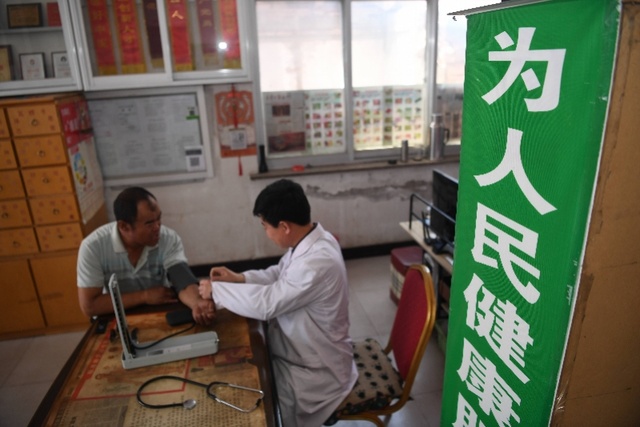
Xinhua News Agency data photos/pictures have nothing to do.
The executive meeting of the State Council pointed out that "actively promoting social medical services can effectively increase the supply of medical services needed by the masses, better protect people’s health, and also stimulate market vitality and release service consumption potential."
Social medical treatment or clear no longer restricted by regional planning.
The executive meeting of the State Council further clarified that the government has no planning restrictions on the total amount and spatial layout of social medical areas. Medical personnel who are on-the-job or leave without pay are allowed to apply for medical institutions.
Nandu reporter noted that in the 2015 "Several Policies and Measures on Promoting the Accelerated Development of Social Medical Services", the statement about the planning of social medical services was that "all localities should publicly announce the number, layout and resource allocation of beds and large-scale equipment of medical institutions in the region on a regular basis, and incorporate social medical services into relevant plans, reserve space for resource allocation of beds and large-scale equipment for social medical services according to a certain proportion, and cancel the specific number of social medical institutions on the premise of meeting the planned total amount and structure.
It can be seen that in the promotion policy of social medical services in 2015, the number of social medical services is still limited by regional planning as a whole; According to the statement of the latest the State Council executive meeting, the number and spatial layout of medical services for the society will no longer be restricted by local regional planning.
In 1999, the former State Planning Commission, the Ministry of Finance and the former Ministry of Health jointly issued the Guiding Opinions on Developing Regional Health Planning, which is the main basis for the formulation of regional health planning in China. When the document was published, the main policies related to medical treatment in our society had not yet been published.
Previously, some experts in social medical care believed that regional health planning or regional medical institution setting planning had become a "rolling door", "glass door" and "revolving door" that caused difficulties in social medical care. In the process of promoting social capital to set up medical institutions, an important bottleneck encountered by social medical institutions is the restriction of regional health planning and regional medical institution setting planning.
The government has made no planning restrictions on the total amount and spatial layout of social medical areas, and local governments have explored it.
The Medical Regulations of Shenzhen Special Economic Zone, which was implemented in 2017, is the first local medical regulation in China. Article 8 stipulates that the municipal health administrative department shall, in accordance with the principles of reasonable layout, appropriate scale, optimized hierarchy and perfect functions, draw up a plan for the establishment of public medical institutions in the city, and announce it to the public after approval by the Municipal People’s Government.
The practical significance of this provision lies in making it clear that the government only makes plans for the establishment of public medical institutions and fully fulfills its responsibility for holding public medical institutions, while social medical institutions do not make planning requirements.
Ten cities will carry out pilot management of clinic filing system.
The the State Council executive meeting also called for improving the efficiency of examination and approval, and establishing a cross-departmental linkage examination and approval mechanism for social medical services in all localities before the end of the year.
It is reported that a few days ago, National Health Commission has issued the Notice on Printing and Distributing the Opinions on Promoting the Development of Clinics, and started the pilot project of filing management of clinics in 10 cities including Beishangguangshen and Shenzhen. Previously, the policies of many places have been made clear, and the setting of individual clinics is not limited by the planning and layout.
In January this year, nine departments, including the National Development and Reform Commission, also issued a Notice on Optimizing the Inter-departmental Examination and Approval of Social-run Medical Institutions, canceling the preconditions and application materials lacking legal and regulatory basis. For example, the review and acceptance of fire protection design of some medical institutions and facilities are simplified. For medical institutions and facilities with a building area of less than 300 square meters or an investment of less than 300,000 yuan, it is no longer required to go through the formalities of fire protection design and completion acceptance.
"Optimizing the cross-departmental examination and approval of social medical services is to reduce the institutional cost of social medical services, create a fair and standardized development environment, and further mobilize the enthusiasm of social forces for medical services". A person close to the policy-making department told the Southern Reporter.
Make more social medical services enter medical insurance and settlement points in different places.
At the the State Council executive meeting on 22nd, it was also proposed that social doctors should be treated equally with public hospitals in the fixed-point basic medical insurance and direct settlement of medical treatment in different provinces, so that more social doctors can enter the fixed-point basic medical insurance and settlement in different places, which will drive the expansion of medical treatment.
At present, the medical insurance policy for non-public hospitals in some places is to "specify how long it will take to obtain medical insurance qualification", which makes it very difficult for non-public hospitals to operate before medical insurance.
Other preferential policies include that social medical institutions can obtain land use rights through allocation, agreement transfer, lease, etc., and can enjoy tax concessions for small and micro enterprises and high-tech enterprises according to regulations, and enjoy the same treatment as public hospitals in terms of hospital grade evaluation and professional title evaluation.
A complaint reporting and acceptance mechanism will be established.
As of November 2018, the number of hospitals nationwide was 32,000. Among them, there are 12,072 public hospitals and 20,404 non-public hospitals, accounting for 63.8% of the total number of hospitals in China. However, in terms of the amount of medical services, social medical services can not be compared with public medical institutions. In 2016, the number of outpatients in private hospitals was 422 million, accounting for only 12.91%.
"The policy of encouraging and supporting social forces to run medical services is not implemented in place, and there are many invisible thresholds." On December 24, 2018, the "Investigation Report on the Distribution and Use of Financial and Health Funds" submitted by the NPC Financial and Economic Committee pointed out that in recent years, the state has introduced a series of policies and measures to encourage and support social forces to run medical services, but social medical institutions and public medical institutions still have unequal treatment in many aspects, and the phenomenon of "glass door" is relatively common.
The the State Council executive meeting held on 22nd indicated that policies will be issued to support the cooperation between social medical institutions and public medical institutions to develop "Internet+medical health", carry out telemedicine cooperation and share medical inspection, imaging and other services. Social medical services can give priority to rehabilitation and nursing services transferred from tertiary public hospitals.
The meeting also supported commercial insurance institutions to connect with the social medical information system and provide one-stop payment and settlement services. The government supports the purchase of services from grassroots medical institutions run by the society, and provides tax relief for social medical institutions that provide rehabilitation and nursing services in the community according to regulations.
Generally speaking, the medical quality and safety of medical institutions are the most important considerations for the public to choose the location of medical treatment. Regarding the supervision of social medical services, the the State Council executive meeting proposed to establish a complaint reporting and acceptance mechanism, crack down on illegal acts according to law, and impose a lifelong ban on serious untrustworthy subjects. (Reporter Wu Bin)